Showing posts with label Raw food diets. Show all posts

Wednesday, February 22, 2012

CDC Report: Raw Milk 150 Times More Likely To Cause Illness

Over at Food Safety News,  James Andrews reports:

"Raw milk and raw milk products are 150 times more likely than their pasteurized counterparts to sicken those who consume them, according to a 13-year review published by the Centers for Disease Control and Prevention on Tuesday. States that permit raw milk sales also have more than twice as many illness outbreaks as states where raw milk is not sold.

The CDC study, published online in Emerging Infectious Diseases, reviewed dairy-related outbreaks between 1993 and 2006 in all 50 states, during which time the authors counted 121 dairy-related illness outbreaks resulting in 4,413 illnesses, 239 hospitalizations and three deaths. 

Despite raw milk products accounting for approximately one percent of dairy production in the U.S., raw milk dairies were linked to 60 percent of those dairy-related outbreaks. In addition, 202 of the 239 hospitalizations (85 percent) resulted from raw milk outbreaks. Thirteen percent of patients from raw milk outbreaks were hospitalized, versus one percent of patients from pasteurized milk outbreaks.

Seventy-five percent of the raw milk outbreaks occurred in the 21 states where the sale of raw milk was legal at the study's onset in 1993. Today, 30 states permit the sale of raw milk, while another seven are considering raw milk legislation changes this year.

The study found that individuals under the age of 20 accounted for 60 percent of those affected by raw milk outbreaks, compared with 23 percent associated with pasteurized products. Children were also more likely than adults to become seriously ill from pathogenic bacteria in raw milk.
The differences in illness severity between raw and pasteurized milk are largely due to the pathogens present in each: People sickened from raw milk typically ingest injurious bacteria -- most commonly Salmonella or Campylobacter -- whereas pasteurized milk outbreaks more often result from "relatively mild" pathogens such as norovirus, according to the CDC."

 Read more here.

I don't endorse governmental restriction of sales of raw milk products, which from this report appear no more hazardous than alcohol, cigarettes, or many common pharmaceuticals.  If people want to take the risk of salmonella infection in order to consume raw milk, that is their own business. 

But if raw milk performs like this, it won't be long before it will lose its market.  Very quickly people will reject a disease vector like this. 

Saturday, March 5, 2011

More Raw Truth About Raw Vegan Diets

From the National Geographic, this map shows the Journey of Man out of Africa, an exodus of modern humans that started about 50, 000 years ago:


Now I ask, what do raw vegan advocates think our ancestors were after by leaving Africa 50,000 years ago?

Our ancestors left Africa and went north, into Europe and the Arctic.  Do raw vegans think this was done by an animal adapted to an exclusively raw vegan diet?  Do they think Europe was full of bananas during the ice ages?   

If you think man is by nature adapted to a raw vegan diet, how the hell do you explain his exodus from tropical paradise into ecosystems where meat was the only reliable food for at least half of the year?

How can an animal adapted to a diet consisting exclusively of tropical fruits and vegetables spread out from Africa all over the entire planet, even into ecosystems (e.g. the arctic) where meat is the only food available almost all year round? 

A commenter on my last post in this series said eating 10 bananas every day is no problem.  Since then I tried five in a day.  It gave me the runs.    Enjoy your bananas, but living on them is not, let's say, a-peel-ing to me.

For more on this topic, see:

The Raw Truth About Raw Vegan Diets

More Raw Truth About Raw Vegan Diets 1

More Vegan Ignorance Exposed

Thursday, February 10, 2011

More Raw Truth About Raw Vegan Diets


Raw fooders like to point to other primates as evidence that humans should eat a raw plant food diet.  
For example, Steve Pavlina :


“There’s very compelling biological evidence that a high fruit diet is optimal for human beings. I can’t share the volumes of info I’ve read about this, but one of the more convincing points is that the nearest animal species to human beings, including gorillas, chimpanzees, orangutans, and bonobos all naturally favor a high fruit diet, meaning that when fresh fruit is readily available, they’ll get the vast majority of their calories from fruit. How they get the rest of their calories varies (nuts, seeds, insects, or even other animals), but a clear preference for a high fruit diet is something they all have in common.”


Like other raw fooders, Pavlina here confused quantity consumed with preference.  The fact that chimps eat more fruit than any other type of food does not indicate that they prefer fruit to all other types of food, any more than the fact that Chinese eat mostly rice means that they prefer rice to all other foods. In fact, chimps prefer to eat termites over fruit, and always start their foraging looking for insects, only moving on to fruits after they have exhausted their insect supplies. The preference for animal matter occurs in other apes; see "Omnivorous Primate Diets and Human Overconsumption of Meat" by William J Hamilton in Food and Evolution edited by Harris and Ross.

Far from vegan, the wild chimpanzee diet is about 5% animal food in the forms of insects (primarily termites) and hunted monkeys and antelope. 

Like other raw vegans, Pavlina appears either to ignore or not know that humans have different gut anatomy and physiology from the great apes. Milton discusses this in detail in "Primate Diets and Gut Morphology: Implications for Hominid Evolution" also found in Food and Evolution.

Briefly, both of the apes closest to humans by genetic constitution (about 98% identical), chimps and gorillas, are hindgut fermenters.  In chimps and gorillas, the hindgut, or colon, comprises about 52 percent of the total gut volume.  It houses microbes that ferment fiber, converting it to fatty acids that supply up to 65% of the animal’s energy requirements.  In contrast, in humans the hindgut comprises only about 17 percent of total gut volume, and has relatively small microbial population.  At most, microbial fermentation in the hindgut can provide about 10% of human energy requirements. 

Because hindgut fermentation provides the majority of the energy used by a chimp or gorilla, the colon is a vital organ for these animals and they will die if you amputate it.  In contrast, the hindgut is of so little importance to human energy acquisition that humans can live without the colon (as shown by victims of colonectomies).

In the human gut, the small intestine dominates, comprising 67 percent of the total gut volume. 

In great apes, most digestion and absorption occurs in the hindgut, aided by microbes, whereas in humans most digestion and absorption occurs in the sterile small intestine.   Human digestion occurs using enzymes released from the pancreas and small intestine, not microbial action.

Non-human primates have more guts than us.


In short, the largely vegetarian apes are, well, adapted to a largely vegetarian diet composed primarily of cellulose.

OK, let’s say you don’t know all of this and want to eat a raw diet based on the chimpanzee model, but don’t want to lose body weight because you already have a desired body composition.  What would that look like?

I expend about 2500 calories daily, so, using the chimpanzee diet as model, to meet my energy requirements for one day, I would have to eat something like this:
·      2 pints blueberries
·      8 apples (106 g ea., 2.5” diameter)
·      8 bananas (101g ea., 6-7” long)
·      4 large oranges (~3” diameter)
·      4 cups raw bok choy
·      16 cups raw collard greens
·      7 ounces raw antelope or termites (vegans substitute nuts)

This comes to 4778 g, or about 10.5 lbs., of food. 

The typical person consumes only 3-5 pounds of food daily.  Can you imagine downing the volume of food in the menu listed above?  Probably not.  Even raw vegan blogger Steve Pavlina had difficulty getting it down:


“The mental adaptation was more difficult than the physical adjustment. Even during the last week of the trial, I still found it difficult to come to terms with how much food I had to eat each day. For example, on the first day of the trial I ate 8-1/2 pounds of food, and I was 2.8 pounds lighter on the scale the next morning. That really takes some getting used to.”


On this note, Pavlina expressed amazement that he increased his total food and crudely calculated caloric consumption yet lost body mass over a 30 day period of eating only raw food:


“During the 30-day trial, I lost 8.0 pounds, about 1.9 pounds per week. I started at 186.0 and ended at 178.0. My body fat also dropped 1.8 percentage points. As of the morning of Feb 3rd, I weighed 174.0.”
“Before this trial I averaged about 2,000 calories a day on a cooked vegan food diet, so I actually lost weight even as I increased my daily calories by 15%.”


Unbeknownst to him, his weight loss despite increased food intake demonstrates how difficult it is for humans, by nature lacking cellulase, to extract nutrients from raw plant food.  

A Losing Proposition

Since Pavlina reports a loss of 8.0 pounds, we can calculate the bioavailability of calories from his raw diet. He reports that his body fat also dropped 1.8 percentage points, but he does not state his beginning and end body fat percentages so I don’t know if he lost only fat or also lost lean mass.   Generally caloric reduction results in weight loss that is at most 75% fat and at least 25% lean, but I will give him the benefit of the doubt and assume that he lost no lean mass at all. 

Eight pounds of fat lost would represent 28,000 calories if it was all fat, or a deficit of 933 calories per day.  Assuming 2000 calories as his maintenance based on his report, this indicates that his caloric absorption was only 2000 minus 933, or 1067 calories per day.  So, of the 2298 raw plant food calories he reports eating, he absorbed only 1067 calories, or 46%.  

That means his carbohydrate intake (into the blood) was nowhere near what he believed; he reports 532 g per day, but since we now know that he absorbed only 46% of what he ate, we can conclude that he probably only absorbed about 244 g of the 532g he ate. 

Let’s guess that his low-fat cooked vegan diet supplied 60% of its 2000 calories as carbohydrate (with 30% as fat and 10% as protein).  That would amount to 1200 calories from 300 grams of carbohydrate.  Hence, by going all raw, he may have actually reduced his total carbohydrate intake!

Further, since he reports consuming about 10% of those 1067 absorbed dietary calories as fat, and 933 calories each day came from his fat stores, we can calculate that each day he was actually burning at least 107 calories of dietary fat plus  933 calories of body fat, or 1040 calories of fat daily. Of the 1067 calories from food,  90% was not fat, or 960 calories. 

So his fuel mix was 960 non-fat dietary calories, and 1040 calories from total fat (dietary plus adipose), so during that month he obtained 1040÷2000 = 52% of his calories from fat.  In other words, he was running on a high fat fuel mix, most of the fat coming from his own adipose. 

He thinks he was running on a low fat diet, but if he was, he couldn’t have lost fat weight.  In fact, he was burning a fuel mix of which about 47% was the dreaded saturated animal fat, i.e. his own body fat.  So, if you feel good eating your raw vegan diet, its because you're burning animal fat!

Can you say "Crap!"?

By these calculations it appears that caloric absorption from a completely raw food vegan diet may be as low as 46%.  Given the data I showed above, this means that I would have to eat more than 20 pounds of raw vegetation daily to absorb enough calories to maintain my current body mass and activity levels.

Eating would be a full time job.  Given a 16 hour waking period, I would have to eat 1.25 pounds of food every waking hour to meet my energy needs.   I'd probably spend a good chunk of the time I wasn't eating sitting on the toilet excreting all the undigested carbage.  My life would consist largely of eating and crapping, just like other primates.  Not quite what I had in mind, how about you?

The Raw Deal

Pavlina's experience confirms previous research showing how much difficulty humans have getting adequate energy from raw vegetal foods. For example, Koebnick et al found BMI below 18.5 in 14.7% of males and 25.0% of females eating raw food diets.  Among these raw fooders, the more raw food they ate, and the longer they had been eating “raw,” the lower their body mass.

Beyond body mass,  Koebnick et al also found general malnutrition among the raw fooders resulting in young women losing their menstrual cycles:


“About 30% of the women under 45 years of age had partial to complete amenorrhea; subjects eating high amounts of raw food (90%) were affected more frequently than moderate raw food dieters.”


Most likely, these women were suffering severe iron and vitamin B12 deficiency, just like the subjects of another study by Koebnick’s team, which found B12 deficiency in at least 38% of raw food adherents.  These people also had low HDL concentrations and elevated homocysteine levels.  

If you believe that humans are designed to eat a diet that leaves 38% of people vitamin B12 deficient, 15% of males and 25% of females underweight,  and stops the menstruation in at least 30% of women in their reproductive years, good luck to you.

Who's Toxic Now?

Sadly, raw fooders claim that eating only raw food will detoxify your system.  Apparently they don’t know that by avoiding meat containing vitamin B12, they pump up their blood levels of homocysteine, a potent toxic by-product of protein metabolism. 

So, if you really want to detoxify, go eat a steak.

I shared this post at ParadigmShift Blogshare.

I wrote more on this topic:

The Raw Truth About Raw Vegan Diets

More Raw Truth About Raw Vegan Diets

P.S.  If you like this post and want to see more like it, please consider making a small donation or a recurring subscription payment using the PayPal buttons in the right hand column.  Fighting fallacies is a full time job I love to do, but I need support to continue doing it.  Also consider sending a link to this post to all of your Facebook and other friends. 

Tuesday, February 8, 2011

The Raw Truth About Raw Vegan Diets: A Primal Perspective


Raw vegan diets are all the rage these days.  Advocates claim that a diet composed exclusively of raw plant foods will support optimal health, protect animals, and save the planet. 

The raw truth is that raw vegan diets don't support health for most people, for a very simple reason:  Humans are not adapted to a raw vegan diet.  For that matter, not even our closest primate relative, the chimpanzee, is adapted to a raw vegan diet.

Let's take a critical look at the rationales and effects of raw vegan diets.

Raw Rationale

David Wolfe, raw food advocate, wrote a book entitled Nature's First Law (Don't buy it!).  In this book, he suggests that the "first law" of nature is that food is raw; if not raw, its not food.   He derives this "law" from the observation that no animal other than humans cooks anything before eating it.  Thus, humans break the "law."

Let's try more reasoning like Wolfe's:
  • No other animal uses language, therefore humans should not use language.
  • No other animal wears clothes, therefore humans should not wear clothes.
  • No other animal makes violins, therefore humans should not make violins.
  • No other animal writes sonnets, therefore humans should not write sonnets.

These people apparently have not noticed that by their reasoning, we humans probably should not be, well, human. 

And, particularly pertinent to the raw food lifestyle, no other animal uses metal knives, blenders, dehydrators, grinders, or juicers, therefore humans should not process foods with any of these items either.  Yet raw foodists seem plenty happy to apply the knife, high speed blending, mechanical grinding, and juice extraction to food.  

Flimsy Analogies

Wolfe and other raw foodists also are fond of using analogies like this:  "If you set fire to your house, it does not improve the house, it destroys it.  Therefore, we can conclude that applying fire to food can only destroy, not improve it."

Raw vegan blogger Steve Pavlina states it this way:

“Incidentally, if you want to see what happens to protein when you cook it, pluck a hair off your head and put a flame under it. Cooked protein becomes a sticky mess that doesn’t digest well at all. Raw plant foods provide all the protein we need, in the right form for easy assimilation.”
Wolfe and Pavlina have constructed straw man arguments against cooking by conflating it with incineration.   

Simply put,  incinerating a house or human hair with a direct flame is, well, not quite the same thing as cooking.   Cooks don't light food on fire, they use finesse to capture and employ radiant heat arising from flames to alter the physical properties of the foods.  Strictly speaking, it is not the fire that they use, it is the heat.

Does cooking make food less valuable?  On the contrary, skillfully applied heat dramatically increases the nutritional value of plant foods.

Hedren et al performed an experiment designed “to develop an in vitro digestion method to assess the impact of heat treatment, particle size and presence of oil on the accessibility (available for absorption) of alpha- and beta-carotene in carrots.”  Their methods:

“Raw and cooked carrots were either homogenized or cut into pieces similar to chewed items in size. The carrot samples, with or without added cooking oil, were exposed to an in vitro digestion procedure. Adding a pepsin-HCl solution at pH 2.0 simulated the gastric phase. In the subsequent intestinal phase, pH was adjusted to 7.5 and a pancreatin-bile extract mixture was added. Carotenoids released from the carrot matrix during the digestion were extracted and quantified on high-performance liquid chromatography (HPLC).”

Their results:  

“Three percent of the total beta-carotene content was released from raw carrots in pieces. When homogenized (pulped) 21% was released. Cooking the pulp increased the accessibility to 27%. Addition of cooking oil to the cooked pulp further increased the released amount to 39%.”
Look, although they treated the finely chopped (chewed-simulation) carrots with an HCl solution at pH 2.0, only 3 percent of ß-carotene was released.  Don't you think this tells us something?  For example, maybe our gut isn't equipped to adequately digest raw plants as they occur in nature?

The human gut can’t extract high amounts of anything from raw carrots or similar vegetables for one simple principal reason:  our bodies do not produce the enzyme cellulase required to digest and break down the plant cells that contain all the nutrients supplied by fibrous plants.  

Source:  Wikipedia


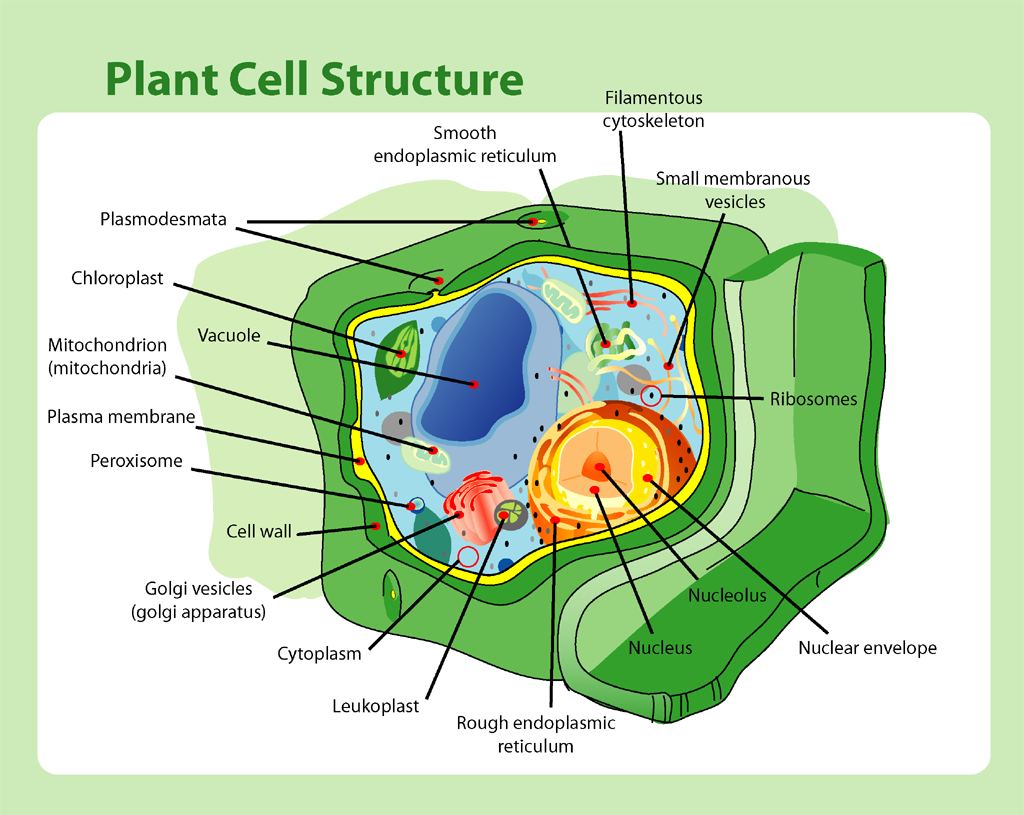
Almost all of the valuable nutrients in plants occur inside the cells of the plants.  These cells have walls composed of cellulose.  Lacking any enzyme to break down this cell wall, humans must use other means to open the cells to extract the nutrients.  Outside modern industrialized nations, most people apply heat to the food, which causes the juice in the cells to expand and this causes the cells to explode open, making their contents more available for absorption.

Thus, carrots cooked to a soft texture deliver 9 times as much ß-carotene as chewed raw carrots.  This experiment explains why raw foodists love and need their blenders and juicers.  Let’s say some raw food person eschews machinery.   Here’s the data:

  • One hundred grams of raw carrot contains 16, 706 potential IU of potential vitamin A activity in the form of carotenes. 
  • A human requires about 1000 mcg daily of retinol equivalent (RE) activity from food. 
  • If only chewing the carrots, a human will extract about 3% of the carotenes, or 501 IU. 
  • 10 IU of ß-carotene from plant foods provides one RE.

From this we can conclude that 100 g of raw carrot provides only 50 RE.  Since a human requires about 1000 RE daily, he would have to eat 20 x 100 g, or 2 kg/4.4 pounds of carrots daily to even have a chance of meeting his vitamin A needs. 

Since the typical person eats only 3-5 pounds of food daily, he would have to eat nothing but carrots.  Two kilos of carrots supplies only 820 calories, assuming that we can extract 100% of available calories from raw plants, or only about 24 calories if we extract calories from chewed carrots at the same 3% rate that we extract ß-carotene (the safer assumption, since all the sugars in carrots are also locked up in the indigestible cells). 

So this guy better be up for spending a lot more time eating to meet his 2500 calorie daily requirement.  How about at least 6 kilos of carrots daily, and possibly 200 kilos daily, to meet your energy requirements?

So the raw fooders fall back on their blenders, which will increase the nutrient delivery  by about 7 times.  Now you only need a mere 600 g/1.3 lbs. of carrots to get enough ß-carotene to have a chance at adequate vitamin A production.  The caloric delivery soars to 84 calories per kilo. Now we’re making some progress.

Perhaps you can begin to see why some people rave about weight loss achieved when they gorge on raw foods.  The caloric delivery can be so low, you may as well be fasting. 

Back to the vitamin A, all of that assumes that he was not one of the approximately 45% of people who don’t convert carotenoids to vitamin A at all. It appears that in the course of human evolution, the activity of ß-carotene 15,15'-dioxygenase (needed to convert ß-carotene to retinol) has declined substantially, such that up to 45% of people do not convert ß-carotene to retinol vitamin A. Hickenbottom et al  found that 45% of 11 men tested did not convert ß-carotene to vitamin A (retinol).  Lin et al found the same in women. Leung et al  identified gene polymorphisms contributing to this variability in carotene conversion capacity. 

Now apply this to calcium.  Take a raw vegetable with a fairly high calcium content, such as collards, which may contain up to 250 mg calcium per 100 g.  Like the ß-carotene in carrots, this mineral lies inside the cells of the collards, surrounded by cellulose that we can’t digest.  This means that we might extract only 3% of the calcium from raw collards, i.e. 7.5 mg per 100 g raw.  A human requires about 750 mg calcium daily, so he’d have to eat 10 kilos of raw collards daily to get adequate calcium.  Let's get chewing!

Actually, one might rightly question whether we can rightly call a food that has gone through a juice extractor, blender, or grinder of any sort "raw," "uncooked,"  or even "unheated."

All of these devices treat the food with friction, and friction always generates heat, the key element of the “cooking” that raw foodists so passionately attack.  One might call the products mimimally heated, but they are heated nonetheless.

Moreover, no other animal has to use blenders to get adequate nutrition from its raw food diet.  If you vegan raw fooders discard cooking because “no other animal does it,” shouldn’t you also discard blenders and juicers for the same reason? 

If your raw food diet only works if you use a blender, I have to wonder what you think your raw food ancestors did without those blenders, only invented in the 20th century.  So far as I know, no archaeological dig has found blenders or juicers in early human tool kits.  Can you imagine stone age women trying to juice carrots by grinding them against rocks?   Not quite optimal foraging.

I've a few more things to say about the claims of vegan raw fooders.  Until next time, have a steak.

I shared this post at ParadigmShiftBlogShare.

I've written more on this topic:  

More Raw Truth About Raw Vegan Diets, 1

More Raw Truth About Raw Vegan Diets, 2

P.S.  If you like this post and want to see more like it, please consider making a small donation or a recurring subscription payment using the PayPal buttons in the right hand column.  Fighting fallacies is a full time job I love to do, but I need support to continue doing it.  Also consider sending a link to this post to all of your Facebook and other friends.